No single model fits every house
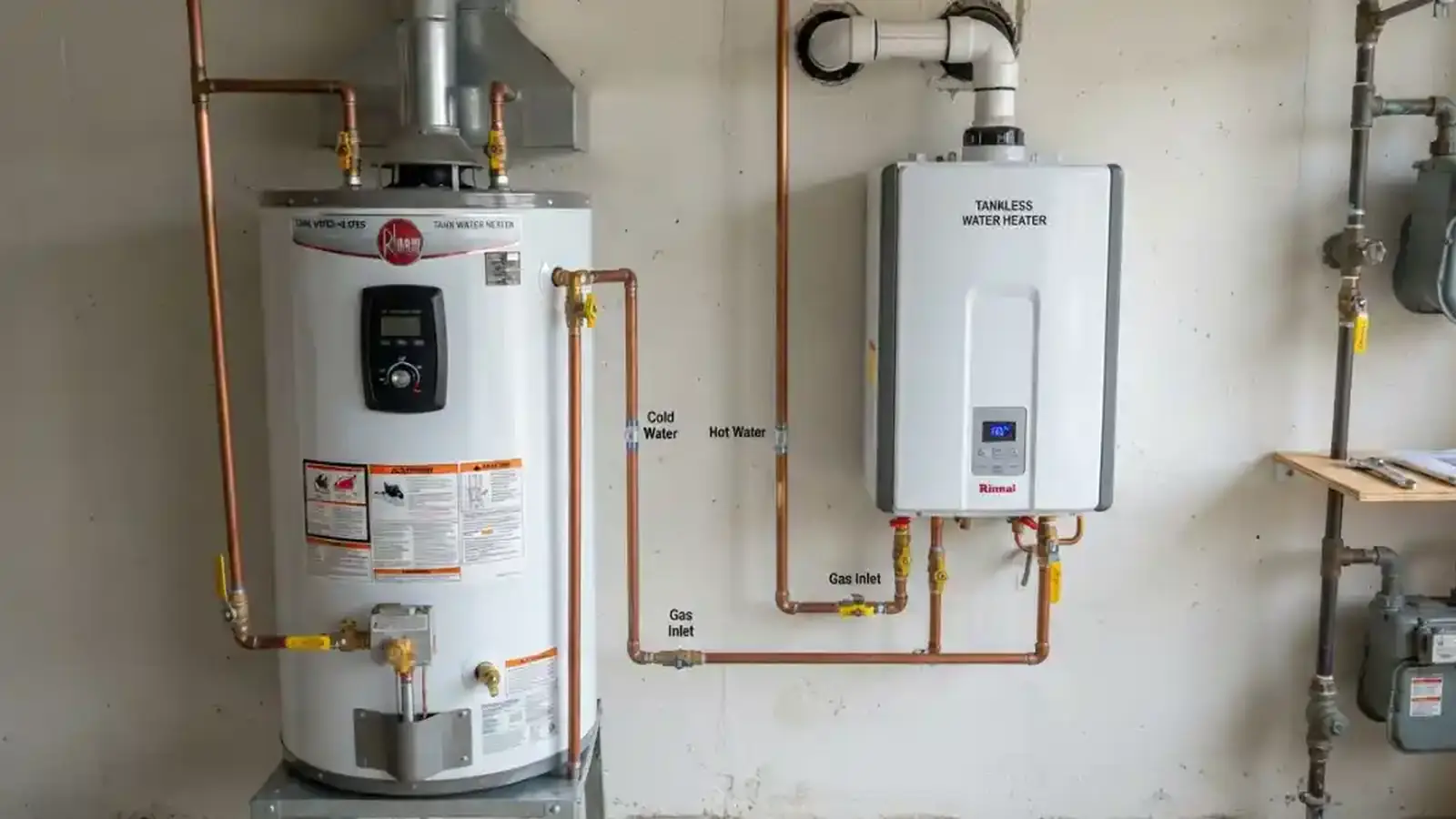
A tankless water heater heats water as it flows instead of storing it in a tank. That can save space and supply hot water without running out, but the unit must be sized for your fixtures and installed with the right gas line, vent and water supply.
We do not recommend a single brand for every home. We explain how to choose a model, so you can compare quotes with confidence.
Size it for your house
Sizing comes down to two numbers: flow rate and temperature rise. Flow rate is how many gallons per minute you need when several fixtures run at once. Temperature rise is the difference between the cold water entering the unit and the hot water you want.
In a cold climate, incoming water is colder in winter, so the heater has to work harder. A unit that is fine in July may struggle in January if it was sized from a summer test.
Add up the fixtures you use at the same time, such as a shower and a dishwasher, then ask your plumber to size from those numbers. Our page on tankless water heaters describes how we do this.
Gas, electric or propane
Fuel changes the installation.
| Fuel | Needs | Watch for |
|---|---|---|
| Natural gas | Gas line of adequate size, venting | Line upgrade may be needed. |
| Propane | Propane supply, venting | Fuel storage and supplier. |
| Electric | Large electrical circuit | Panel capacity. |
Venting and gas line checks
These items drive cost and safety.
- Gas line size and length to the unit.
- Vent route and clearance to windows.
- Condensate drain for high efficiency units.
- Combustion air supply.
- Electrical outlet for controls.
- Clear space for service access.
Ready to compare tankless options?
Call us and we will walk through sizing, fuel and venting for your home.
Questions about the existing home
Look at where the old heater sits and what is around it. A tankless unit needs a gas line, a vent and electricity, and sometimes a condensate drain. A basement with an old chimney may need a new vent liner. A closet may need a new vent through the wall.
Tell the installer about any plans to finish the basement or move the laundry, so the new unit fits the future layout. A little planning now saves you from moving it later.
What to expect on installation day
A typical install runs through these steps.
- Shut off the water and gas and drain the old heater.
- Remove the old unit and prepare the wall.
- Mount the new heater and connect water, gas and vent.
- Connect the condensate drain and power.
- Test for leaks, check combustion and set the temperature.
- Walk you through the controls and the maintenance schedule.
Tankless or tank: a fair comparison
Neither type is better in every home.
| Factor | Tankless | Tank |
|---|---|---|
| Space | Wall mounted, small | Floor standing, larger. |
| Hot water supply | Continuous within flow limits | Limited by tank size. |
| Installation | Often more work | Usually simpler. |
| Standby loss | None | Some heat lost from the tank. |
Household patterns that suit tankless
Tankless units work well for families who shower at different times or who are tight on space. They also help a vacation home that sits empty for part of the year, since they do not keep a tank of water hot.
Homes where many fixtures run at once may need a larger unit or two units. A large family with back to back showers and laundry should size for the peak, not the average.
Efficiency and features worth paying for
Condensing models capture extra heat from exhaust, so they run more efficiently, but they need a drain for condensate and often plastic venting. Non condensing models are simpler and may suit a retrofit with an existing metal vent.
Look for a unit with a clear display, service access and a manufacturer that publishes error codes. A heater you cannot diagnose becomes expensive to own, regardless of how well it heats.
Common problems after installation
Most issues trace back to installation details.
- Cold water sandwich, where a short burst of cold water appears between uses.
- Minimum flow too high for a single low flow fixture.
- Scale on the heat exchanger from untreated water.
- Venting that is too long or has too many bends.
- A gas line that is too small to feed the unit at full firing rate.
Maintenance you should plan for
Tankless heaters are not maintenance free. Flushing the unit with a descaling solution removes mineral buildup that reduces flow and efficiency. Check the inlet screen for debris and follow the maker's schedule.
Ask the installer to set up service valves that make flushing easy. A heater without isolation valves is much harder to maintain, and many homeowners skip the flush as a result.
Questions to ask before you buy
Take these to every quote.
- What flow rate and temperature rise did you use to size it?
- What gas line or electrical upgrades are needed?
- How will the unit be vented and drained?
- What is the warranty and who services it?
- Will you pull the permit?
Waterford note: test the water and check the permit
The New London system, which supplies Waterford, publishes an annual water quality report, and the report does not list hardness. Scale is the enemy of a tankless heat exchanger, so test your tap or ask a water professional before you decide on a model and whether to add a scale filter.
Waterford's Building Department says permits are required before improvements, which can include gas appliance work. Ask what your installation needs and who is responsible for the permit.
Connecticut licenses plumbing trades through the Department of Consumer Protection, and you can verify a contractor on its eLicense lookup before you sign.
Per the Connecticut Office of the State Building Inspector, the 2022 state code adopts the 2021 International Plumbing Code (IPC), and a tankless install must follow its relief and discharge rules as well as the maker's guidelines.
Frequently asked questions
It depends. Tankless saves space and delivers continuous hot water. A tank is simpler and often costs less to install.
Maker information suggests a long life with regular maintenance, so ask for the specific model.
Yes, periodically, especially if your water leaves scale. Ask your installer for a schedule.
Sometimes. Many tankless units need a larger gas line than a tank heater.
Most need electricity for controls, so the answer is usually no without a backup.