Why the wait for hot water happens
When you open a hot tap far from the heater, you first run out the cooled water sitting in the pipe. That wait wastes water and patience. A recirculation loop keeps hot water moving through the pipes so it is near the tap when you need it.
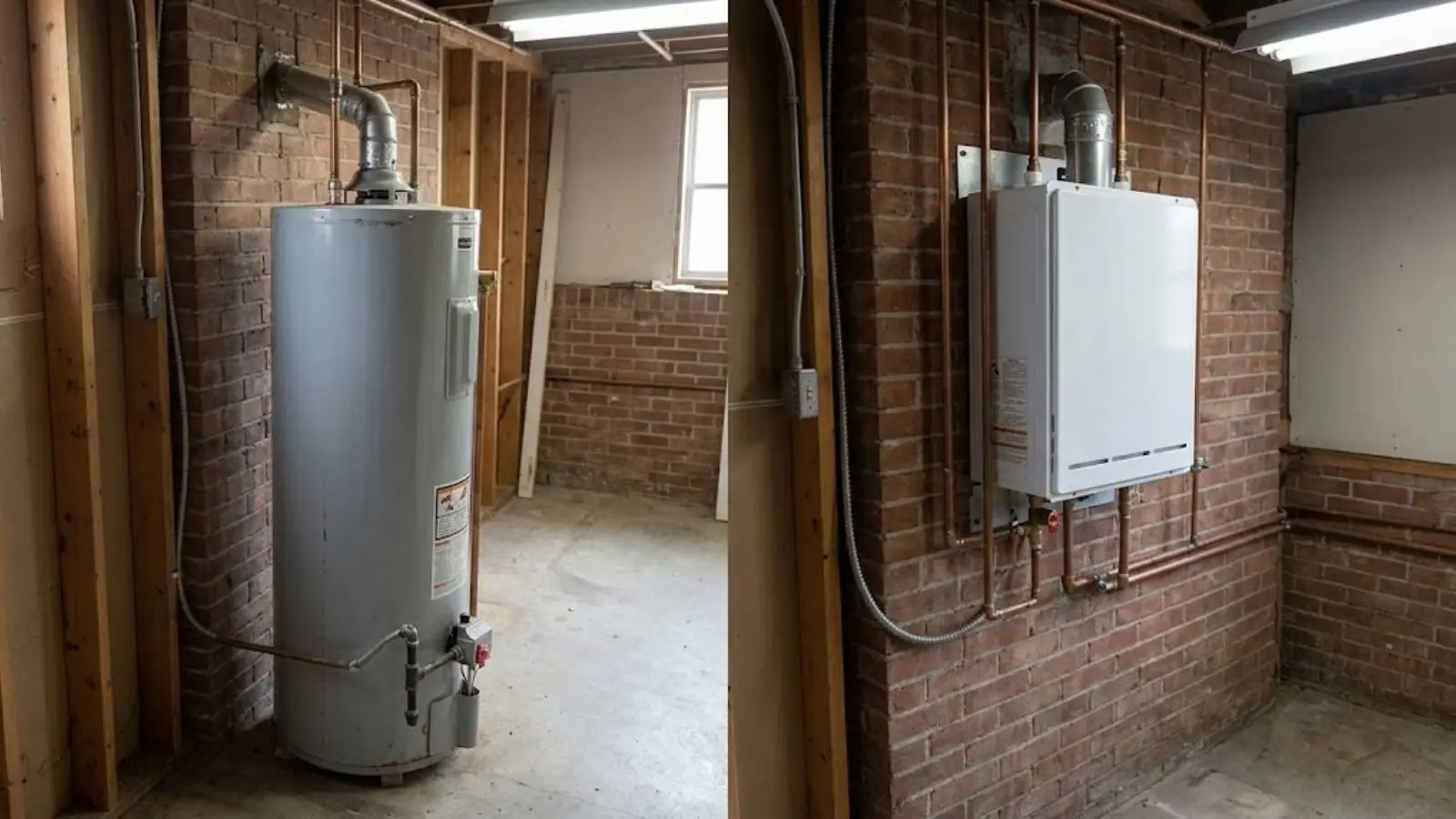
The loop adds a pump and sometimes a return line. It works with tank and tankless heaters, but it has to be matched to the heater, and some tankless models need a built in or separate buffer for it.
Types of loops
Three common approaches.
| Type | How it works | Trade off |
|---|---|---|
| Dedicated return line | A pump pushes water through a return pipe | Best performance, more piping. |
| Crossover valve | Uses the cold line as a return | Simpler, warm water at the cold tap. |
| Built in recirculation | Heater includes a pump or buffer | Check the model supports it. |
Costs you do not see on the box
Weigh these before you add a loop.
- Electricity for the pump, which may run on a timer or sensor.
- Energy lost from warm pipes, especially in cold spaces.
- Heater wear if the unit cycles often.
- Installation work, including a return line or valve.
- Heat in the cold line with some crossover systems.
How to make a loop efficient
A timer or demand button turns the pump on only when you need hot water. Insulating the hot line reduces heat loss, which matters in a basement or crawlspace.
If you rarely wait long for hot water, a loop may not be worth it. If a distant bathroom takes a minute or more to warm up, a loop can make a real difference.
Our tankless water heater page explains how we check the heater model before adding a loop, and plumbing installation covers new return lines.
Is a loop worth it for your home
A loop makes the most sense in larger homes, in houses where the bathroom is far from the heater and where people dislike waiting. It makes less sense in a small home with short pipe runs.
Ask your plumber to measure the pipe run and time the wait. If the wait is short, save your money. If it is long, a loop with a timer can be a fair upgrade.
What a plumber checks first
These checks come before any new parts.
- Heater model and whether it supports a loop.
- Existing pipe layout and insulation.
- Space for a pump and a check valve.
- Electrical outlet for the pump.
- Water pressure and expansion tank condition.
- Local permit needs.
Sizing and testing after installation
After a loop is installed, test how fast hot water reaches the farthest tap. A well designed loop brings hot water within a few seconds. If it takes longer, check the pump speed, the check valve and the insulation.
Check that the heater is not cycling on and off every few minutes. Short cycling is a sign that the loop flow is too low for the heater to fire steadily, and it wears the unit out.
Alternatives to a full loop
A loop is not the only way to cut the wait.
- A small point of use heater under a distant sink.
- Shortening or insulating the longest hot water run.
- Moving the heater closer to the busiest fixtures.
- A demand pump that starts only when you press a button.
- Using smaller diameter pipe for the run to the farthest tap.
How much water a loop can save
If you wait a minute for hot water at a distant tap, you may run several gallons down the drain each time. A loop reduces that waste, but it uses electricity for the pump and may lose heat through pipes. The net saving depends on how often you use the tap and how well the pipes are insulated.
A rough check helps. Time how long it takes for hot water to arrive and estimate how many times a day you do it. If the total is small, a loop may not repay its cost.
Choosing the pump and controls
A few choices make a loop quieter and cheaper to run.
- A timer that matches your morning and evening routine.
- A demand button or motion sensor for occasional use.
- A temperature sensor that stops the pump when the line is warm.
- A check valve that prevents backflow.
- Insulation on the hot line, especially in cold spaces.
Problems to avoid
Running a pump all day without a control wastes energy and wears the heater. A crossover valve can leave warm water in the cold line, which some people dislike.
Poor placement can cause noise, and a pump installed without isolation valves is hard to replace. Ask your installer to describe where each part will go before work begins.
Check the heater first
Not every tankless unit is built to work with a recirculation system. Some need a buffer tank to avoid short cycling, and some void warranty if a pump is added in the wrong way.
Read the manual or ask the installer. A short phone call with the maker's support line before purchase saves trouble later.
Waterford note: permits and pressure
Waterford's Building Department says permits are required before improvements, and a plumbing change that adds piping may count. Ask the department what applies to your project.
Water pressure at your house is shaped by the New London supplied system and your own plumbing. If pressure is unusually high, a pressure reducing valve and an expansion tank may be needed before adding a loop, and a plumber can test it.
Connecticut licenses plumbers through the Department of Consumer Protection, so check an installer on the eLicense lookup before work starts.
The 2021 International Plumbing Code (IPC), which the Connecticut State Building Code adopts according to the state, includes rules on check valves and thermal expansion that apply when a loop is added.
Frequently asked questions
It can if it runs all day. A timer or demand control keeps it efficient.
No. Check the model and ask the maker.
Not always. A crossover valve works in some homes, with trade offs.
It reduces the water you run down the drain while waiting for heat.
Most are quiet, but location matters. We place it where noise will not bother you.
See East Lyme and New London.