
What gentle methods can and cannot do
Natural drain remedies can help with light buildup such as soap, hair and small amounts of grease. They are gentler on pipes and septic systems than harsh chemicals, and they are cheap. They will not clear a solid blockage or a main line problem.
Think of them as maintenance and first aid. If the drain does not improve after one or two tries, switch to a mechanical tool or call a plumber.
Methods that can help
These are worth a try on a slow drain.
- Hot tap water flushed through a drain after use.
- Dish soap and hot water for a greasy sink.
- A plunger, which is mechanical and not a chemical at all.
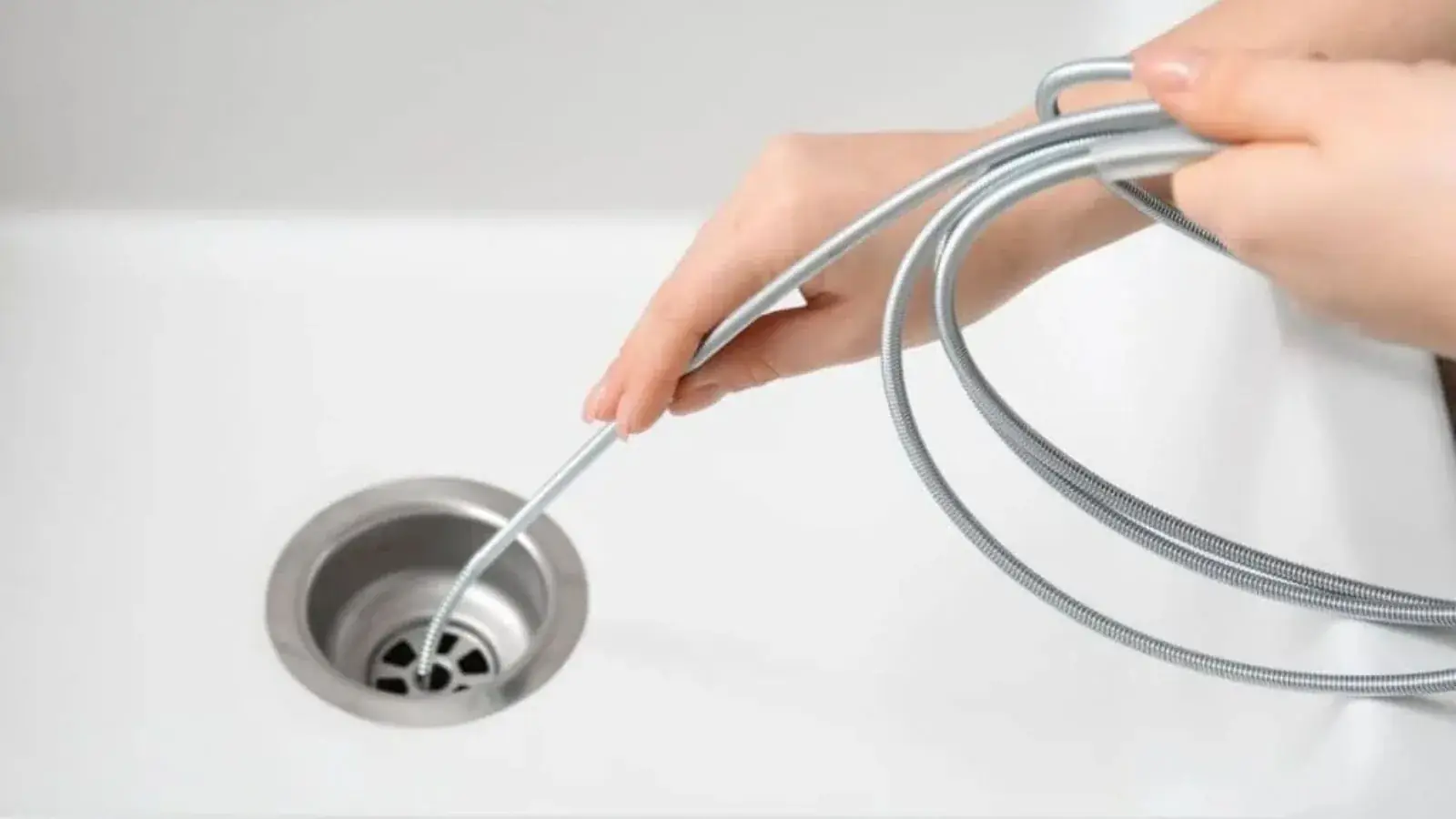
- A drain snake or plastic hair tool for bathroom drains.
- Baking soda followed by warm vinegar for a light odor or film.
A simple routine for a slow sink
Try this once before anything stronger.
- Remove visible debris and the stopper.
- Pour a cup of baking soda down the drain.
- Add a cup of warm vinegar and cover the drain for about fifteen minutes.
- Flush with hot tap water.
- Plunge or snake if the drain is still slow.
What does not work well
Baking soda and vinegar do not dissolve hair or a hard blockage. Most of the fizz happens near the surface and does little deeper in the line.
Boiling water poured into a plastic pipe can soften joints. Hot tap water is enough. Enzyme cleaners can help with organic film, but they work slowly and need time.
If the clog returns every few weeks, the cause is deeper than a home remedy can reach. See drain cleaning for how a plumber clears and checks the line.
Remedies by drain type
Match the method to the fixture.
| Drain | Try first | Avoid |
|---|---|---|
| Kitchen sink | Hot water and dish soap, plunger | Pouring grease down the drain. |
| Bathroom sink | Hair tool, trap cleaning | Harsh chemicals. |
| Tub or shower | Drain strip, hot water flush | Boiling water on plastic. |
| Toilet | Plunger, toilet auger | Baking soda alone for a solid clog. |
How to clean a sink trap
A trap clean often works better than any remedy.
- Place a bucket under the trap and put on gloves.
- Loosen the slip nuts by hand or with a wrench.
- Remove the trap and empty it into the bucket.
- Clean the trap and the pipe ends with a brush.
- Reassemble the trap, run water and check for leaks.
Natural care for septic homes
Homes with septic systems benefit from gentle care, because the tank relies on bacteria. Avoid bleach and strong chemicals, and spread laundry loads through the week. Use less grease and fewer food scraps.
Schedule pumping on the interval your septic professional advises. A tank that is overfull can back up into the house, and no home remedy fixes that.
Enzyme cleaners and when they help
Enzyme cleaners use bacteria or enzymes that break down organic matter such as grease and food film. They work slowly, so they are best for regular maintenance rather than an emergency. Use them at night so they have hours to work.
They do not dissolve hair or hard blockages. If the drain is fully stopped, mechanical clearing is the right step. Enzymes can still help prevent the next clog once the line is open.
Tools that beat home remedies
A few inexpensive tools solve most small clogs.
- A flange plunger for toilets and a cup plunger for sinks.
- A plastic drain strip for hair in a tub or shower.
- A small hand auger for sinks and tubs.
- A trap wrench or a bucket and gloves for cleaning the trap.
- A wet and dry vacuum for stubborn sink clogs.
Know when to stop
If you have tried a remedy twice and the drain is still slow, stop. More attempts only waste time, and forcing water down a blocked line can cause an overflow.
If more than one fixture is slow, if sewage appears in a drain or if you smell sewer gas, call a plumber. Those are signs of a main line problem that home remedies cannot fix.
Prevention beats cleaning
Use a strainer in the shower and sink to catch hair. Wipe grease from pans into the trash before washing. Run hot water for a short time after rinsing greasy dishes.
Flush only toilet paper. Wipes, even those marked flushable, do not break down the way paper does and are a common cause of main line backups.
Waterford note: septic and sewer care
If your Waterford home uses a private septic system, natural methods are the safer choice, since harsh chemicals can harm the bacteria in the tank. Ask a septic professional about the right pumping schedule.
Waterford's tap water comes through the New London system, whose annual report notes lime added for pH and phosphate added for corrosion control. Plain hot tap water is fine for drain care, and the treatment does not make clogs more likely.
If a clog turns out to be a damaged pipe, the Building Department says permits are required before improvements, so ask what a repair needs.
According to the New London system's annual report, the water supplied to Waterford carries about 10 ppm of sodium, so plain tap water is a fine rinse and carries no meaningful baggage for drains.