
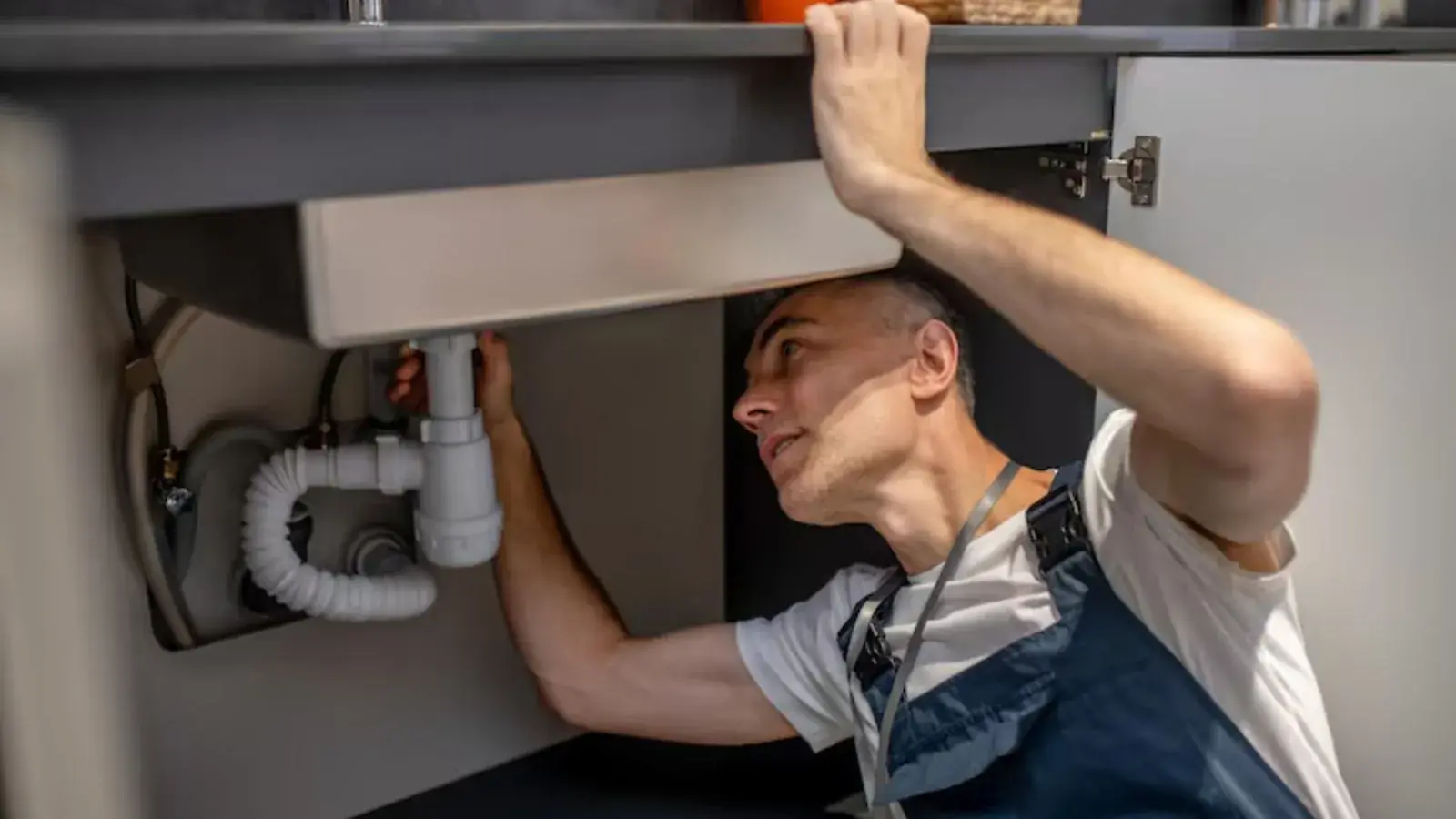
What the job involves
A garbage disposal mounts under the sink drain opening, connects to the trap and drain line and needs power from an outlet or a hardwired circuit. Most of the work is mechanical, but each step has details that cause leaks and noise when rushed.
If you are replacing an old disposal, the job is simpler. If you are adding one for the first time, you may also need an electrical outlet, a new drain fitting and a decision about your septic or sewer system.
Check before you buy
These points decide the model and the plan.
- Sink drain opening size and type.
- Outlet or switch under or beside the sink.
- Space under the sink for the unit and the trap.
- Dishwasher drain connection.
- Sewer or septic, which affects whether a disposal suits the home.
- Cabinet clearance for service access.
Steps in a typical installation
A simplified outline of the work.
- Shut off power and water, and clear the cabinet.
- Remove the old strainer and mount the new sink flange with plumber's putty.
- Attach the mounting assembly and hang the disposal.
- Connect the discharge to the trap, and the dishwasher hose if there is one.
- Remove the dishwasher knockout plug before connecting the hose.
- Connect power, run water and test for leaks.
Common mistakes
Forgetting the dishwasher knockout plug is the most common mistake. The dishwasher then cannot drain, and the error is easy to miss until the first load.
Overtightening the flange cracks the sink or distorts the gasket and causes slow leaks. A slightly loose mount produces vibration and noise.
Poor trap alignment causes slow drains and odors. Take time to line up the pipes before tightening anything. Our garbage disposal page describes how we handle installs and repairs.
Want a disposal installed?
Call us. We install, test and explain how to keep the new unit running.
Troubleshooting a new installation
Common problems and where to look.
- Leak at the sink flange: check the putty and mounting ring.
- Leak at the drain connection: check gaskets and slip nuts.
- Humming but not spinning: free a jam with the hex key.
- Dishwasher not draining: check the knockout and the hose.
- No power: check the reset button and the switch.
- Bad smell: clean the chamber and run citrus peels with cold water.
When to call a plumber
If the cabinet is cramped, the sink is stone or the drain line needs changes, hire a plumber. A new circuit or a switch beside the sink belongs to an electrician. A leak you cannot trace after tightening the connections is also a sign to call.
We install disposals as part of kitchen work and as standalone jobs. Ask about the right unit for your sink and your household habits.
Choosing a motor size and features
Smaller motors handle light use, while larger ones grind more and run quietly. Look for a stainless steel grinding chamber, sound insulation and a warranty that fits how you cook. A disposal for a busy family kitchen is a different purchase from one for a single person.
Batch feed models run only when a stopper is in place, which some households prefer for safety. Continuous feed models run when you flip a switch and are more common.
Electrical and safety checks
Power is the part many people skip.
- Confirm the circuit can carry the load.
- Use a switch within reach of the sink and away from the water.
- Never put a hand in the chamber, even when the power is off.
- Use the correct cord or hardwire kit.
- Turn off the breaker before wiring.
- Have an electrician add a circuit if needed.
Maintenance after installation
Run cold water before, during and after use. Grind small amounts of food at a time. Avoid fibrous and starchy foods that wrap around the blades or pack the drain.
If the disposal hums but does not spin, the flywheel is jammed. Turn off power and use the hex slot on the bottom to rock it free, then press the reset button. If it leaks, check the seals and the sink flange before replacing the unit.
Disposal and drain lines
What to feed and what to avoid.
| Safe in small amounts | Avoid |
|---|---|
| Soft food scraps | Grease and cooking oil. |
| Small bits of vegetables | Large amounts of coffee grounds. |
| Citrus peels, occasionally | Pasta, rice and potato peels in bulk. |
| Cold water running during use | Bones and hard shells. |
Waterford note: sewer or septic
Whether a disposal suits your Waterford home depends on how it drains. If you are on private septic, food waste adds solids to the tank, so ask a septic professional about pumping schedules before you install one. If you are on public sewer, ask the town whether any local rules apply.
The Waterford Building Department says permits are required before improvements. A simple swap may not need one, while new circuits or new drain lines might, so ask before you start.
If a clog follows an install, see our guide to drain cleaning. For new circuits, a licensed electrician should handle the wiring.
According to the state's published code page, the 2022 Connecticut State Building Code adopts the 2021 International Plumbing Code (IPC), which covers the trap and drain arrangement for a disposal.
Frequently asked questions
Many homeowners can, if they are comfortable with plumbing and electrical basics. A plumber saves time and avoids leaks.
Often yes if the sink has none. A licensed electrician should add one.
It adds solids to the tank. Ask a septic professional first.
A swap takes about an hour. A first time install takes longer.
The knockout plug may still be in place.
See Montville and New London.