
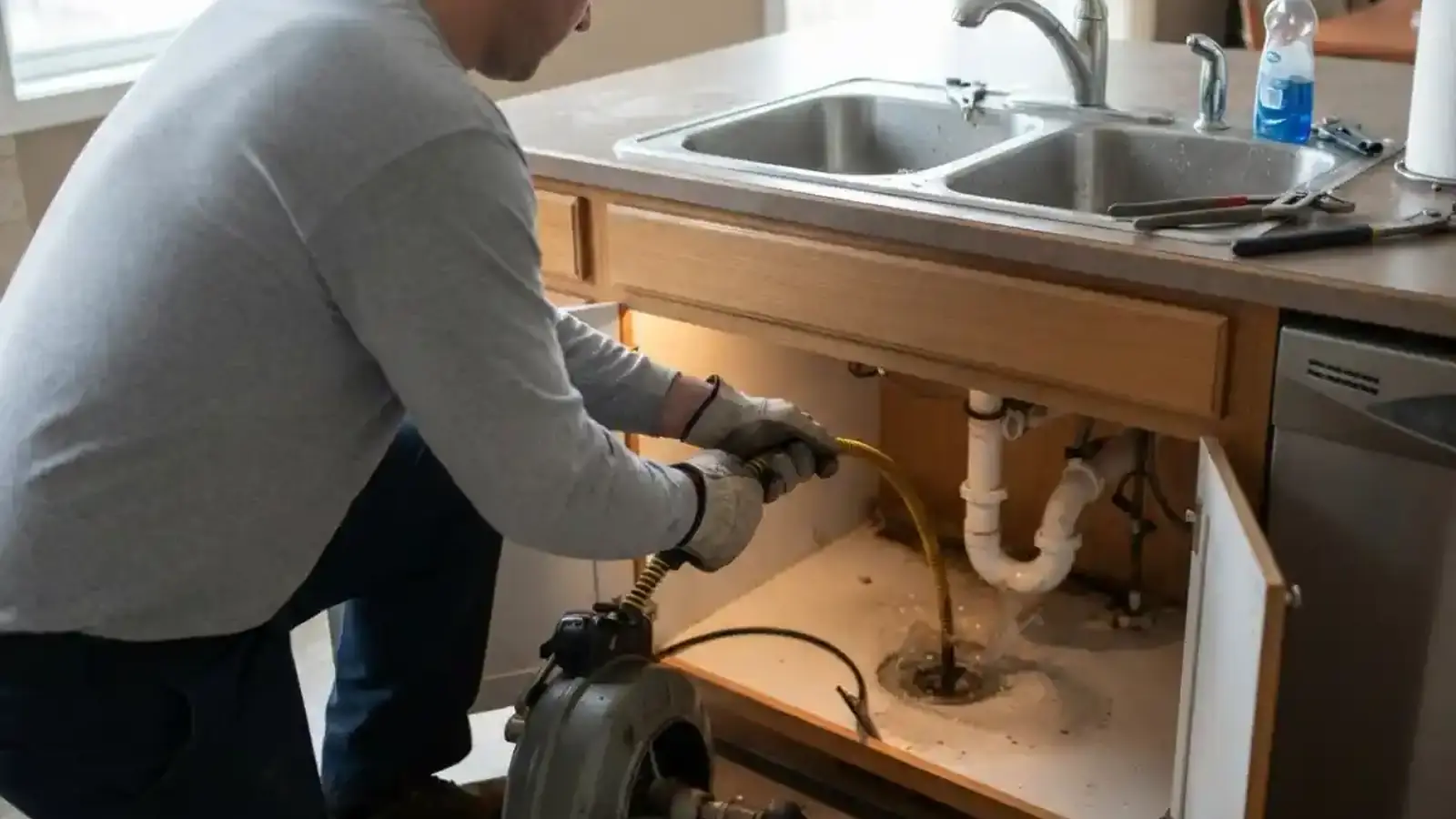
Read the pattern before you reach for a tool
A single slow sink usually has a local clog in the trap or the branch line. When several fixtures slow down together, or a toilet gurgles when the washing machine runs, the blockage is likely in a shared line.
Knowing the pattern saves time and avoids the wrong tool. A plunger fixes a trap clog, while a main line needs a cable or jetting and sometimes a camera.
One fixture or many
A quick diagnosis chart.
| Pattern | Likely location | First step |
|---|---|---|
| One sink slow | Trap or branch line | Plunger or trap cleaning. |
| Tub and sink slow | Shared branch | Cable the branch. |
| Several fixtures plus gurgling | Main line | Call a plumber. |
| Sewage in lowest drain | Main line blocked | Stop using water, call now. |
What causes clogs
Typical culprits in house drains.
- Hair and soap in bathroom drains.
- Grease and food in kitchen lines.
- Wipes and paper products in toilet lines.
- Roots entering a pipe joint.
- A sagging or damaged pipe that holds water.
- Mineral scale in older lines.
Safe things to try
Work from simple to stronger.
- Remove the stopper and clear visible hair.
- Plunge with a tight seal and keep water in the sink.
- Remove and clean the trap under the sink.
- Use a hand auger sized for a sink or tub drain.
- Stop and call if more than one fixture is affected.
Drains backing up?
Call the 24/7 line. We clear the line and find out why it clogged.
Preventing the next clog
A few habits protect every drain in the house.
- Use a hair catcher in every shower and tub.
- Wipe pans with a paper towel before washing.
- Flush toilet paper only, and put wipes in the trash.
- Run hot water for a short time after greasy dishes.
- Clean sink stoppers and pop up drains every few months.
- Schedule a camera look if the same line clogs twice in a year.
Why the same drain keeps clogging
A drain that clogs again and again usually has a reason beyond hair or soap. The pipe may have a belly where water pools, a joint that has shifted or roots that have found a small opening. Each leaves a spot where debris collects.
Clearing the line gives temporary relief, but the cause remains. A camera inspection shows the shape of the pipe and points to the right repair. It is a small cost next to repeated emergency calls.
If you rent, tell your landlord about repeated clogs in writing. A pattern of backups is useful evidence that the line needs more than a quick cleaning.
What to do while you wait for a plumber
Limit the damage until help arrives.
- Stop using water in sinks, tubs, toilets and the washer.
- Keep children and pets away from standing water.
- Open a window if there is a sewer smell.
- Move belongings off the floor near the lowest drain.
- Take photos for your insurer and call the 24/7 line.
Kitchen, bathroom and laundry clogs
Kitchen drains clog from grease, soap and food particles. Bathroom drains clog from hair and soap scum. Laundry lines can clog from lint and the detergent residue that builds along the pipe.
Each area suggests a different habit to change. Use a strainer in the shower, keep grease out of the sink and put a lint filter on the washing machine hose. These small steps cut the number of calls dramatically.
Floor drains and basement lines
A floor drain that gurgles or smells often has a dry trap or a partial blockage in the line. Pour water into it each month to keep the trap sealed, and check it after heavy rain.
If water backs up through a floor drain, the main line may be blocked, or in some homes, groundwater may be entering the system. A camera look separates the two. Call us and we will check it.
What a professional visit includes
Here is what to expect.
- The plumber asks about the pattern and history of clogs.
- A cable or jetter clears the line from the nearest access.
- A camera confirms the line is clear and shows any damage.
- You receive a summary of what was found.
- The plumber advises on prevention or repair if needed.
When to call right away
Sewage rising in a tub or floor drain is an emergency. Keep people and pets away, stop using water and call our 24/7 line. Do not pour chemicals into a backed up line, since they can burn skin and hurt the pipe.
For a clog that returns after cabling, ask for a camera look. Our drain cleaning page explains the visit, and sewer line cleaning covers main line work.
Waterford note: sewer, septic and permits
Before treating a main line problem, find out whether your Waterford home uses public sewer or private septic. A septic backup may mean a full tank or a failing field, which is a different fix from a sewer lateral blockage.
If a camera shows damage and a repair is needed, the Building Department says permits are required before improvements, so ask what a line repair needs.
Waterford includes shoreline and riverside areas, and wet conditions can stress older lines. Keep a record of any backups, because repeated problems help a plumber find the cause.
Under the 2021 International Plumbing Code (IPC), which Connecticut's State Building Code adopts according to the state, every fixture needs a trap and a vent, and a missing vent is a classic cause of gurgling drains.
Frequently asked questions
Air is moving through a partial blockage, often in the main line.
We advise against it. It can damage pipes and is dangerous to handle.
Most homes do not need a schedule. Clean when drains slow down.
Yes, often. Put wipes in the trash.
If sewage is rising, yes. Call right away.
See New London and East Lyme.