
Two tools for two problems
Waterproofing tries to keep water out of the basement, through exterior coatings, drainage and grading. A sump pump removes water that collects under or around the foundation. A wet basement can need one, the other or both.
The right answer depends on where the water comes from. Seeping through walls, rising through the floor and rushing in through a window well are different problems with different fixes.
Find the source first
Match the symptom to the likely cause.
| What you see | Likely cause | Usual fix |
|---|---|---|
| Damp walls after rain | Surface water and poor grading | Gutters, grading, exterior drainage. |
| Water at the floor edge | Rising groundwater | Perimeter drain and sump pump. |
| Water at a window well | Failed drainage or flashing | Repair window well drainage. |
| Water only during storms | High water table | Sump pump with backup. |
What a sump pump does
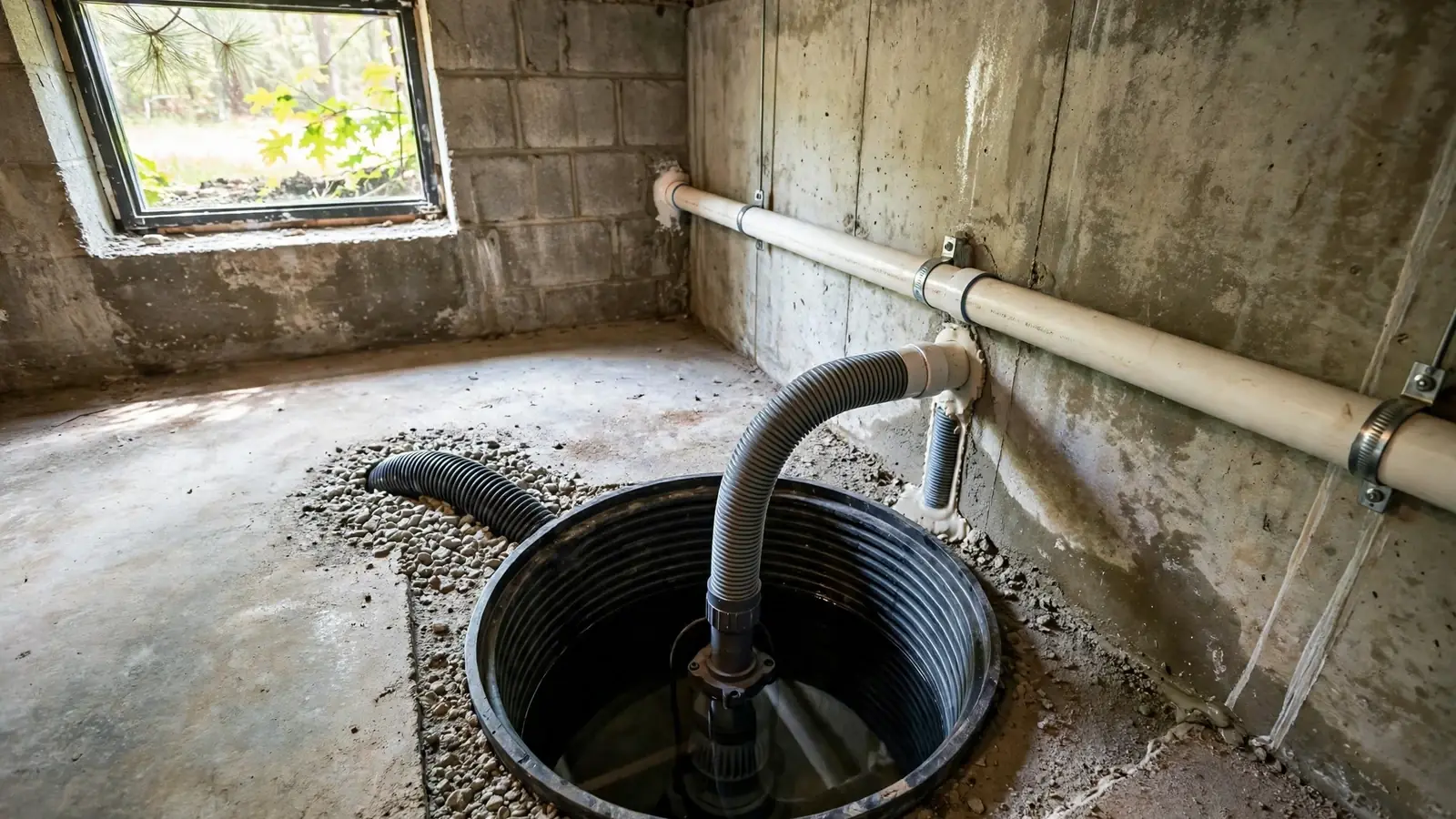
A sump pump sits in a pit and pumps water away from the foundation when the level rises. It deals with water that has already collected, so it is a strong choice where groundwater rises after storms.
A pump alone does not stop dampness in the walls. It protects the floor and the contents of the basement. Our sump pump page describes repair, replacement and backup options.
What waterproofing does
Waterproofing includes exterior membranes, interior drain channels, wall coatings and grading changes. Exterior work is costly because it needs excavation, while gutters and grading are simple and often overlooked.
Start with the cheap fixes. Extend downspouts several feet from the foundation, clear gutters and slope soil away from the house. If water still appears, call a waterproofing specialist, because that work is a different trade from plumbing.
Basement taking on water?
Call the 24/7 line. We repair pumps and explain when a waterproofing contractor is the better call.
How big should a sump pump be
Pump size depends on how fast water enters the pit and how high it must be lifted. A pump that is too small runs constantly and wears out. One that is too large may cycle on and off rapidly, which also shortens its life.
A plumber looks at the pit, the discharge height and the inflow during rain. Most homes do well with a mid range submersible pump, plus a backup that runs on a battery or on water pressure when the power fails.
Costs to expect and what drives them
Waterproofing costs depend on the method. Gutters and grading are the cheapest. Interior drains and a pump cost more, and exterior excavation costs the most because it involves digging around the foundation.
Pump work depends on the pump, the pit and the discharge line. A swap is a short job, while a new pit and discharge line takes longer. Ask each contractor for a written scope and compare the same work across quotes.
Signs of a failing pump
Catch these before a storm.
- The pump runs but moves little water.
- The motor hums and does not start.
- The pump cycles on and off rapidly.
- Rust or corrosion on the pump body.
- Strange noises while running.
- Water in the pit that never goes down.
Simple fixes to try first
Before spending on large projects, try these.
- Clean gutters and extend downspouts several feet from the house.
- Grade soil to slope away from the foundation.
- Seal visible cracks in the wall and floor.
- Check window wells for debris and drainage.
- Test the sump pump and add a backup if you have one.
How a perimeter drain system works
A perimeter drain sits at the edge of the footing and collects groundwater before it rises into the basement. The water flows to a sump pit and out through a discharge line. It is a larger project than a pump alone, because it involves digging or cutting the floor.
A plumber often installs the pump and the discharge, while a waterproofing contractor handles the drain and the membrane. Coordinating the two avoids gaps and finger pointing later.
Choosing a contractor
Whoever you hire, ask for these.
- A written scope that explains each step.
- A clear warranty and what it covers.
- References you can contact.
- Proof of license and insurance.
- An explanation of how the pump and backup are sized.
When you need both
Many basements benefit from a combination.
- A perimeter drain that leads to a sump pit.
- A pump sized for the inflow.
- A battery or water powered backup for outages.
- Gutters and grading that reduce the load.
- A discharge line that drains away from the house and the neighbors.
Waterford note: lots of water around
Waterford covers about 44.6 square miles, and more than 11 of them are water, including the Niantic River along its western border. Properties near rivers, wetlands and the shore face higher groundwater than those on high ground, which makes a pump and a backup especially sensible there.
Do not connect a sump pump discharge to the sanitary sewer. Public sewers are not built for groundwater, and the town can confirm the local rules.
New construction or drainage changes may need permits. The Building Department says permits are required before improvements, so ask what a perimeter drain needs.
The 2021 International Plumbing Code (IPC), adopted by the Connecticut State Building Code according to the state, addresses how storm and groundwater are kept out of the sanitary sewer.
Frequently asked questions
Not always. It removes water but does not stop damp walls. Grading and gutters help a lot.
We handle pumps, drains and plumbing. Exterior waterproofing is a separate trade.
Pour water into the pit and watch it start and shut off smoothly.
If your basement floods when the power is out, yes.
Away from the foundation and not into the sewer.